More or Less? Look at Bees, Bats and Ladybugs, Then Circle the Right Set
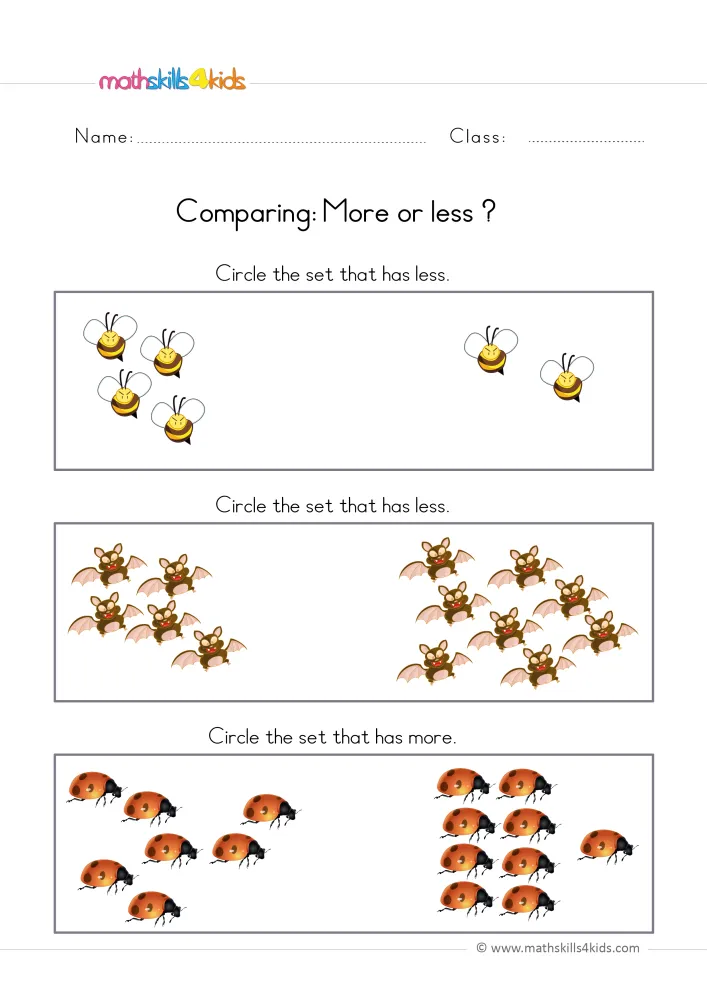
Spread five crackers across a plate, push seven into a tight pile, and ask a preschooler which side has more. Many will point to the wide one. The eye judges space before it judges number. This Pre-K more or less circle the set worksheet plays with that habit in three boxes: bees, then bats, then ladybugs. In each box, two groups of the same animal sit apart. Your child circles the smaller group twice, then the bigger one in the last row.
When spread out looks like more
Children compare in two ways. First, they trust a glance, and with small, clear gaps that works well. Later, they learn that counting gives the final word. Moving between the two is what comparing sets is really about.
The page climbs that ladder on purpose. In the top box, four bees face two, so estimating at a glance is enough. Next, five bats face eight, and the gap narrows. However, the ladybugs set a small trap. Seven sit loosely on the left, while nine stand in neat columns on the right. The loose group can look bigger.
That row deserves time. It shows your child that a quick look is a good guess, but only a guess.
Listen for the word that changes
Read each instruction aloud and lean on the key word. The page prints "less"; when you speak, say "fewer" instead, because bees and bats are things you count. For example, ask, "Which side has fewer bees?" Most children answer before you finish.
Then comes the switch. The last box asks for more, yet a child on a roll may circle the smaller group again. Do not point to the right side. Instead, ask, "Read it with me: more or fewer?" and let them look again.
So the ladybugs become a counting job. Have your child tap each one and say the number in a whisper. Seven here, nine there. Now the tidy columns win. That moment, when counting objects overturns a first impression, is the real lesson of the page.
Two piles on the snack plate
Snack time gives you two piles to compare every day. Put out two groups of grapes or crackers and ask, "Which plate has fewer?" Next, spread the small pile wide and ask again. If your child says it changed, count it together, slowly.
Toy animals work just as well on the floor. Line up a herd of farm animals, set a smaller group beside it, then ask which group needs more to match. Also, sing "Five Little Ducks": each verse, one fewer duck comes back, so the song practices more and fewer without a sheet.
Words like fewer, more and the same build math vocabulary for later. At the end, praise the checking: "You counted the ladybugs instead of guessing. That was smart."
About this Pre-K more or less circle the set worksheet with animal groups
Download the worksheet: More or Less? Look at Bees, Bats and Ladybugs, Then Circle the Right Set
 Worksheet2nd Grade Estimating Objects Worksheet: Squares, Circles, Chairs and Ticks
 Worksheet1st Grade Reading Tally Charts Worksheet: Flowers, Plush Toys and Baby Animals
 Worksheet1st Grade Spinner Probability Worksheet: More Likely, Less Likely or Equally Likely
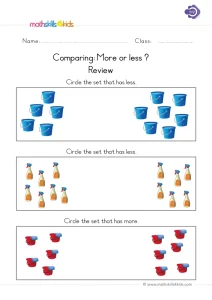 Worksheet1st Grade More or Fewer Review Worksheet: Circle the Set
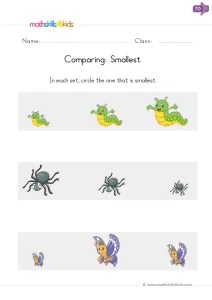 WorksheetKindergarten Small, Smaller, Smallest Worksheet: Circle the Tiniest Bug
A few related activities
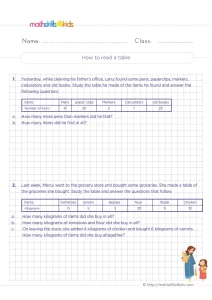 Two small tables, one of office items and one of groceries in kilograms. Your child finds the numbers,…See the activityGrade 2 Math — Time to the half hourGrade 2 math review game (ages 7–8): time to the half hour. Instructions are read aloud, and every…See the activity3rd Grade 1 Times Table Worksheet: 18 Column Facts and the Identity Rule
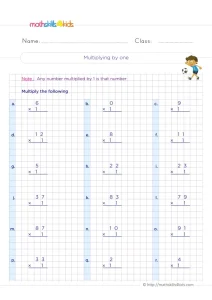 Eighteen column facts times 1, from 0 × 1 to 91 × 1. One rule solves them all:…See the activity
