1st Grade Matching Bar Graphs Worksheet: Which Graph Fits the Shopping List?
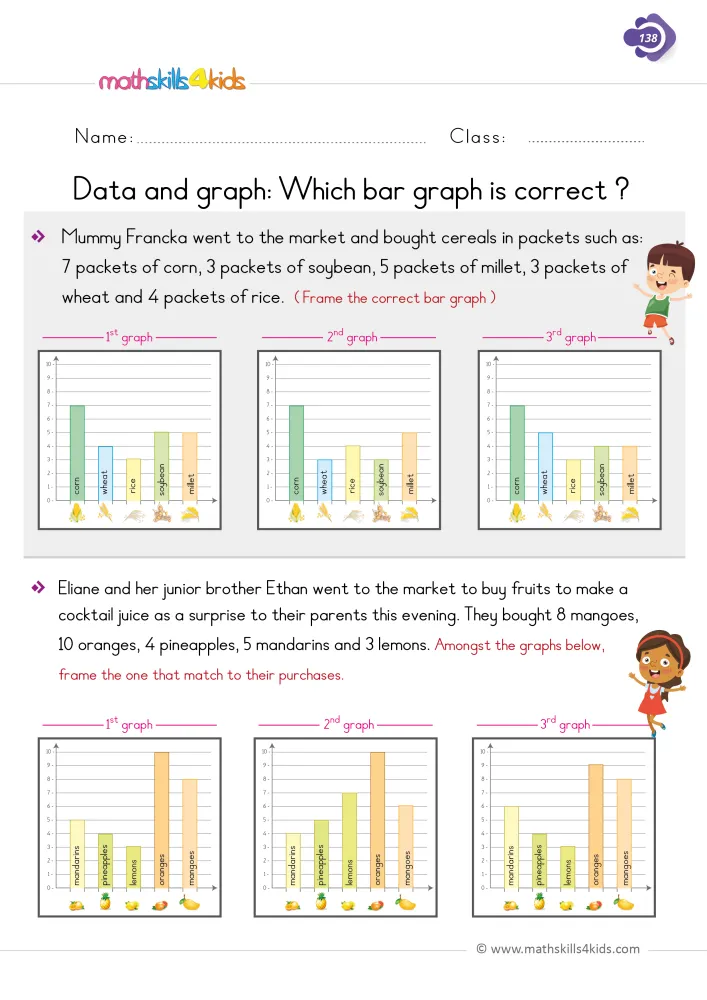
Put three bar graphs side by side in front of a six-year-old and they will usually pick the one with the tallest bar they expected, then stop looking. This 1st grade matching bar graphs worksheet asks them to keep looking. Each of the two parts starts with a market shopping list. The first lists packets of corn, soybean, millet, wheat and rice. The second lists mangoes, oranges, pineapples, mandarins and lemons. Below each list, three graphs look almost the same. Only one matches every number, so your child checks bar by bar and frames the right graph. A second page gives the answer key.
Why almost-right graphs are the point
A bar graph is only useful if each bar tells the truth. On this page, the wrong graphs are not wild guesses: they change one or two bars by a small amount. So your child cannot match by shape alone.
That pushes a real data skill. Your child has to read the scale on the left side, find the top of a bar and turn it into a number. Then that number goes back to the shopping list for a check.
In the grain part, the corn bar is the same in all three graphs. However, the smaller bars decide everything. One careful look per bar.
At the table: the order of the bars
Start with the corn. Ask, "Where does the corn bar stop?" Your child traces the line across to the scale.
The grain graphs hold the main trap. The list names soybean second, while the bars put wheat second, so a child may compare the wrong pair. Instead of correcting, try, "Point to the word under the bar first."
Also watch wheat and soybean. In the two wrong graphs, one of them stands too tall, sometimes by only one step. Then let your child lay a ruler flat across the bar tops to compare the height of each bar.
For the fruit, the mandarins, lemons and oranges are the bars to check. A finger on each bar, one at a time, keeps the search honest.
From the fruit bowl to a graph
Bar graphs feel real once the data is your own. After shopping, sort the fruit into piles on the table, then line up each pile in a column. The columns are already a bar graph. Also, ask your child to write a short list of what you bought, then draw a bar for each item.
The Very Hungry Caterpillar by Eric Carle works well here. While you read it, list the fruit the caterpillar eats each day, then turn the list into bars on paper.
These moments show that a graph is just a list standing up. When the page is done, check it with the answer key and name the effort: "You checked every bar. That is careful reading."
About this 1st grade matching bar graphs worksheet and its answer key
Download the worksheet: 1st Grade Matching Bar Graphs Worksheet: Which Graph Fits the Shopping List?
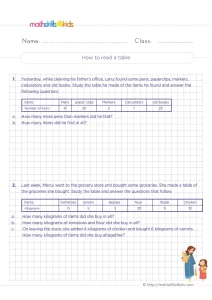 Worksheet3rd Grade Reading a Data Table Worksheet: 2 Tables
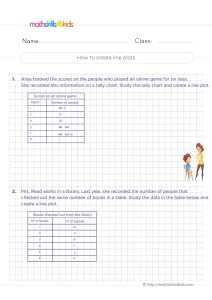 Worksheet3rd Grade Making Line Plots from Data Worksheet: Scores and Books
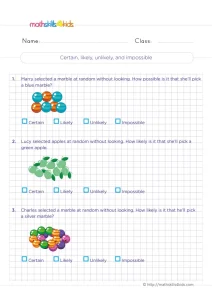 Worksheet3rd Grade Likely and Unlikely Events Worksheet: Marbles and Apples
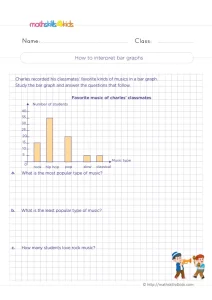 Worksheet3rd Grade Interpreting Bar Graphs Worksheet: Favorite Music
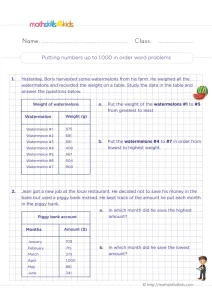 Worksheet2nd Grade 3-Digit Data Tables Worksheet: Watermelons and a Piggy Bank
A few related activities
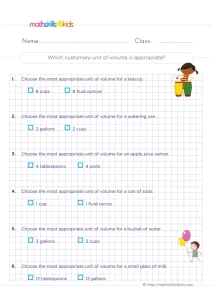 Six everyday containers, from a teacup to a bucket of water. Your child ticks the more sensible unit…See the activity3rd Grade Two-Step Multiply and Divide Problems: 3 Stories
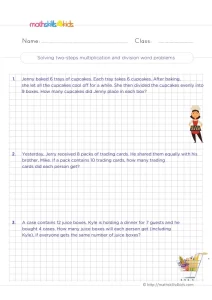 Three stories about cupcakes, trading cards and juice boxes. Your child multiplies to find a total, then divides…See the activity3rd Grade Change and Total Cost Worksheet: Money Word Problems
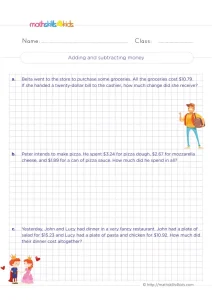 Three money word problems about groceries, a pizza and a dinner out. Children find the change from a…See the activity
