2nd Grade Frequency Table Worksheet: Count the Data, Tick the Right Table
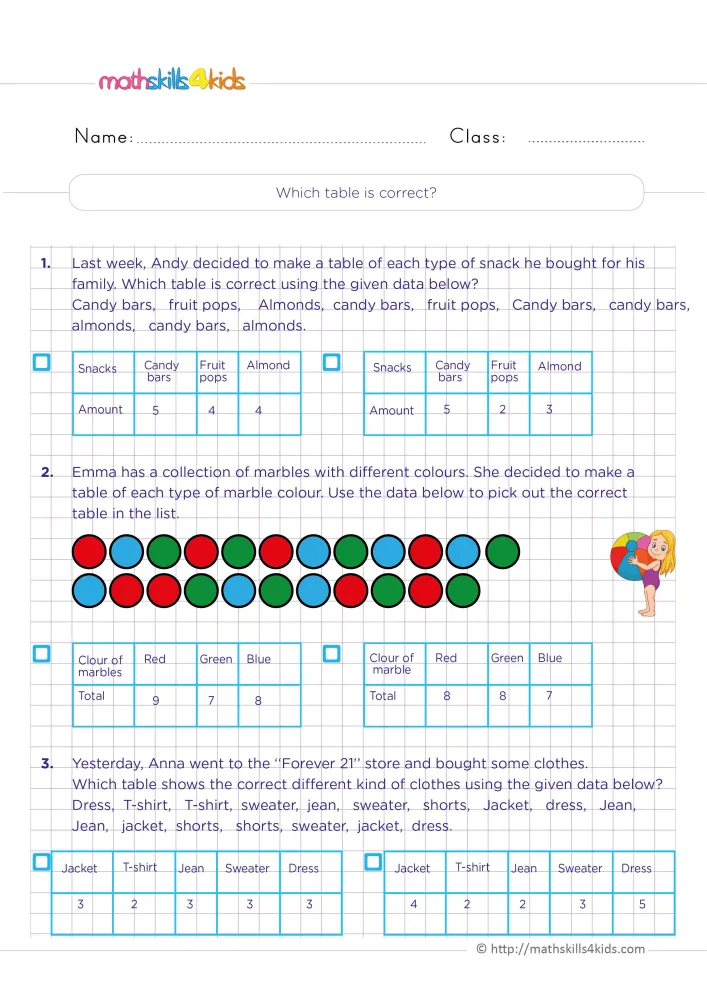
Spill a bag of marbles in front of a seven-year-old and they will sort by color before you can ask. This 2nd grade frequency table worksheet turns that habit into data work. Each of the three problems shows a set of data and two small tables, and only one table tells the truth. For example, Andy lists the snacks he bought, candy bars, fruit pops and almonds, while Emma lines up red, green and blue marbles in two rows. Then Anna writes down the clothes she bought, from T-shirts to jackets. Your child counts each kind and ticks the box beside the correct table. A second page gives the answer key.
Why a table is a tidy way to count
A list of words like "candy bars, fruit pops, almonds, candy bars" is hard to read. However, a table groups the same items and gives one number for each kind, which is called a frequency table, and it is the first step in working with data.
This page asks your child to check a table, not build one. So they must count each kind in the raw list, then compare their numbers with both tables. Spotting the wrong one is a strong test of careful counting.
The marbles add a twist: the data is a picture, not words. In fact, a quick tally mark under each color is often the safest method.
At the table: the marbles and the clothes
Start with Andy's snacks. Ask, "How many candy bars? Touch each one as you count." Since the list is short, it builds confidence before the harder problems.
The marbles are the real test. They are mixed in two rows, and children often count a marble twice or skip one. Instead of correcting, suggest, "Put a small dot on each red marble as you count it." Then repeat with green and blue.
In problem 3, the clothes list is long and some words come back with a capital letter, like Jean and jean. Ask, "Is it the same kind of clothing?" Also, encourage your child to tally the data first and compare with the tables only at the end.
Counting what is in your home
Data is everywhere at home. Sort the fruit bowl into apples, bananas and oranges, and let your child draw a little table with a number for each. After laundry, count shirts, socks and pants the same way.
The card game Go Fish works well for this. After a round, ask your child to make a table of how many pairs each player collected.
You can also collect data from the family: ask everyone their favorite color and record it in a table on the fridge.
Once you finish the page, praise the checking: "You counted the list and then looked at both tables. That is careful work."
About this 2nd grade frequency table worksheet and its answer key page
Download the worksheet: 2nd Grade Frequency Table Worksheet: Count the Data, Tick the Right Table
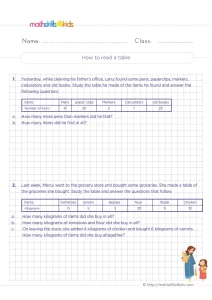 Worksheet3rd Grade Reading a Data Table Worksheet: 2 Tables
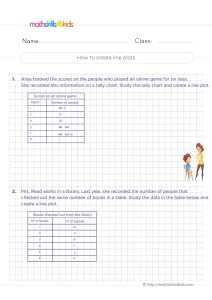 Worksheet3rd Grade Making Line Plots from Data Worksheet: Scores and Books
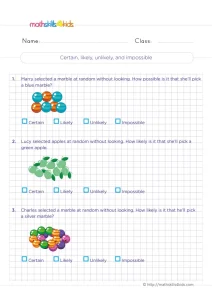 Worksheet3rd Grade Likely and Unlikely Events Worksheet: Marbles and Apples
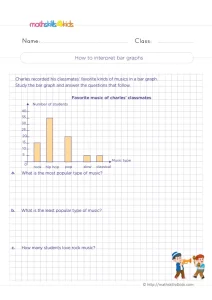 Worksheet3rd Grade Interpreting Bar Graphs Worksheet: Favorite Music
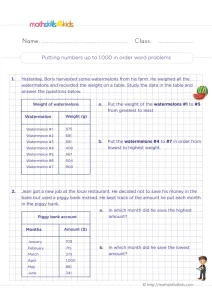 Worksheet2nd Grade 3-Digit Data Tables Worksheet: Watermelons and a Piggy Bank
A few related activities
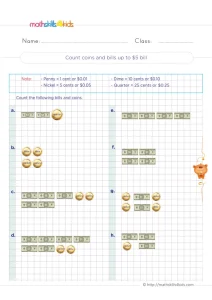 Eight sets of $1 and $5 bills with pennies, nickels, dimes and quarters. Children find each total in…See the activity3rd Grade Do You Have Enough Money Worksheet: 3 Word Problems
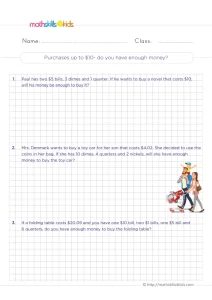 Three shopping stories with bills and coins. Children count the money, compare it with the price and decide…See the activity3rd Grade Cups, Pints and Gallons Worksheet
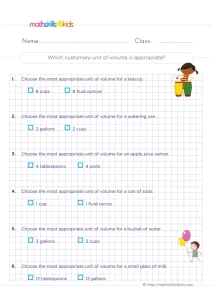 Six everyday containers, from a teacup to a bucket of water. Your child ticks the more sensible unit…See the activity
