2nd Grade Pictograph with a Key Worksheet: Count by Tens and by Twos
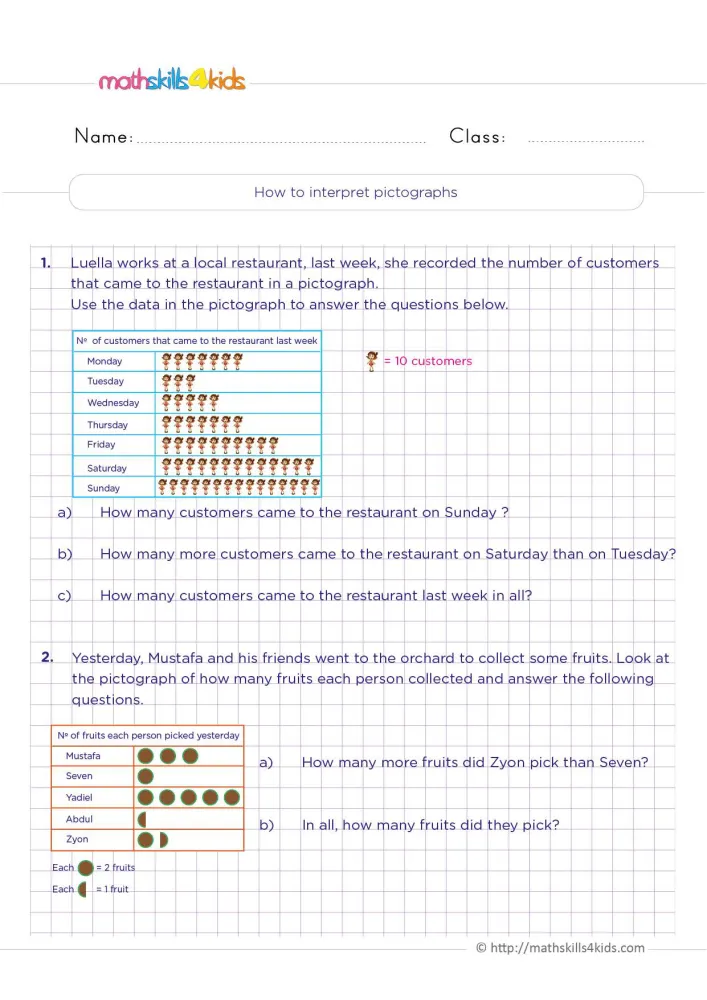
Show a seven-year-old a row of little people on a chart and they will count them one by one, then stop, puzzled, when the total seems too small. This 2nd grade pictograph with a key worksheet is about that moment. In the first chart, Luella records the customers at a restaurant from Monday to Sunday. Its key says one small figure means 10 customers. In the second chart, five friends pick fruit in an orchard. There, one brown circle means 2 fruits, while half a circle means 1. Your child reads the key first, then answers five questions, from a single day to the whole week. A second page gives the answer key.
Why the key changes everything
In a simple picture graph, one picture is one thing. Here, each picture stands for more than one, so your child must multiply in their head, or rather skip count. A row of seven figures means 10, 20, 30, up to 70 customers.
That is why the first chart is good practice to skip count by tens, while the second one counts by twos. The half circle then adds a small surprise: a picture can stand for part of the key too.
Finally, the questions grow in size. One asks about one day, one compares two days, and one asks for the total in all, which means adding every row.
At the table: Sunday and the half circles
Start with the key. Ask, "What is one little figure worth?" Then let your child point to Tuesday and count by tens.
Sunday has the longest row, and many children count the figures and write that number. Instead of correcting, ask, "Did you count figures or customers?" That one question usually does it.
In the fruit chart, the half circles are the trap. A child may count a half as a whole and add 2. For example, point to the half circle and ask, "If a full one is 2 fruits, what is half of it?" Also, writing the number at the end of each row before answering the questions keeps the totals tidy.
Picture graphs at home
Make your own pictograph with stickers. Track how many glasses of water each person drinks in a day, with one sticker for two glasses. At the end of the week, count the rows together.
The picture book Ten Black Dots by Donald Crews shows how a few dots can stand for many things, which is the same idea as a key. After reading it, draw a dot chart of toys with one dot for five.
Also, sorting coins into rows of dimes is a quick way to count by tens.
Once you finish the page, check it with the answer key together and praise the reading: "You checked the key before counting. That made all the difference."
About this 2nd grade pictograph with a key worksheet and its answer key
Download the worksheet: 2nd Grade Pictograph with a Key Worksheet: Count by Tens and by Twos
 Worksheet3rd Grade Reading a Data Table Worksheet: 2 Tables
 Worksheet3rd Grade Making Line Plots from Data Worksheet: Scores and Books
 Worksheet3rd Grade Likely and Unlikely Events Worksheet: Marbles and Apples
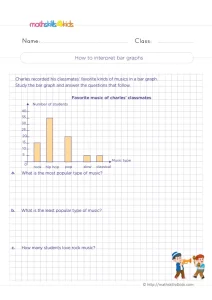 Worksheet3rd Grade Interpreting Bar Graphs Worksheet: Favorite Music
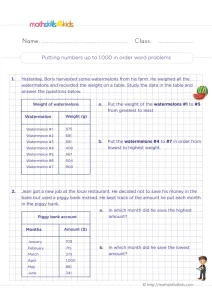 Worksheet2nd Grade 3-Digit Data Tables Worksheet: Watermelons and a Piggy Bank
A few related activities
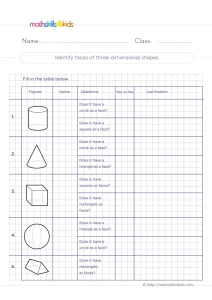 A table of five solid shapes, from a cylinder to a triangular prism. Name each one, answer yes…See the activity3rd Grade Area of Rectangles in Real Life Worksheet: 3 Word Problems
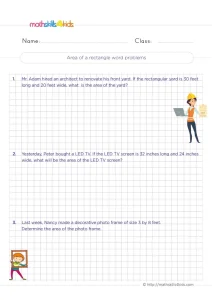 Three word problems about a yard, a TV screen and a photo frame. Children multiply length by width…See the activity3rd Grade Divide 3-Digit by 1-Digit Word Problems: 3 Stories
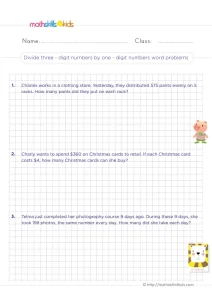 Three word problems about pants on racks, Christmas cards and photos. Your child divides a 3-digit number by…See the activity
